What goes wrong in data centre fibre cabling
Data centre fibre cabling fails in a small number of ways, and most of them are specification errors rather than faulty parts.
- Loss budgets have shrunk. At 100G and 400G over multimode, IEEE 802.3 allows 100 m on OM4 for SR4 and SR8 optics, and the channel loss allowance is tight. Every extra mated pair in a cassette-based design takes part of it.
- Polarity errors. Trunks, cassettes and cords ordered to different methods produce a link with no light and no visible fault.
- Density. Frames fill with cord slack and thick jackets before they fill with ports, and airflow suffers.
- Contamination. A multi-fibre end face has 8 to 24 cores to keep clean, and one dirty core fails a lane.
- Migration. Duplex 10G and 25G plant meets parallel 40G, 100G and 400G optics, and the transition needs breakouts or conversion harnesses.
What Radix supplies for data centres
This is the group Radix is built around. Density and repeatable insertion loss are the specification.
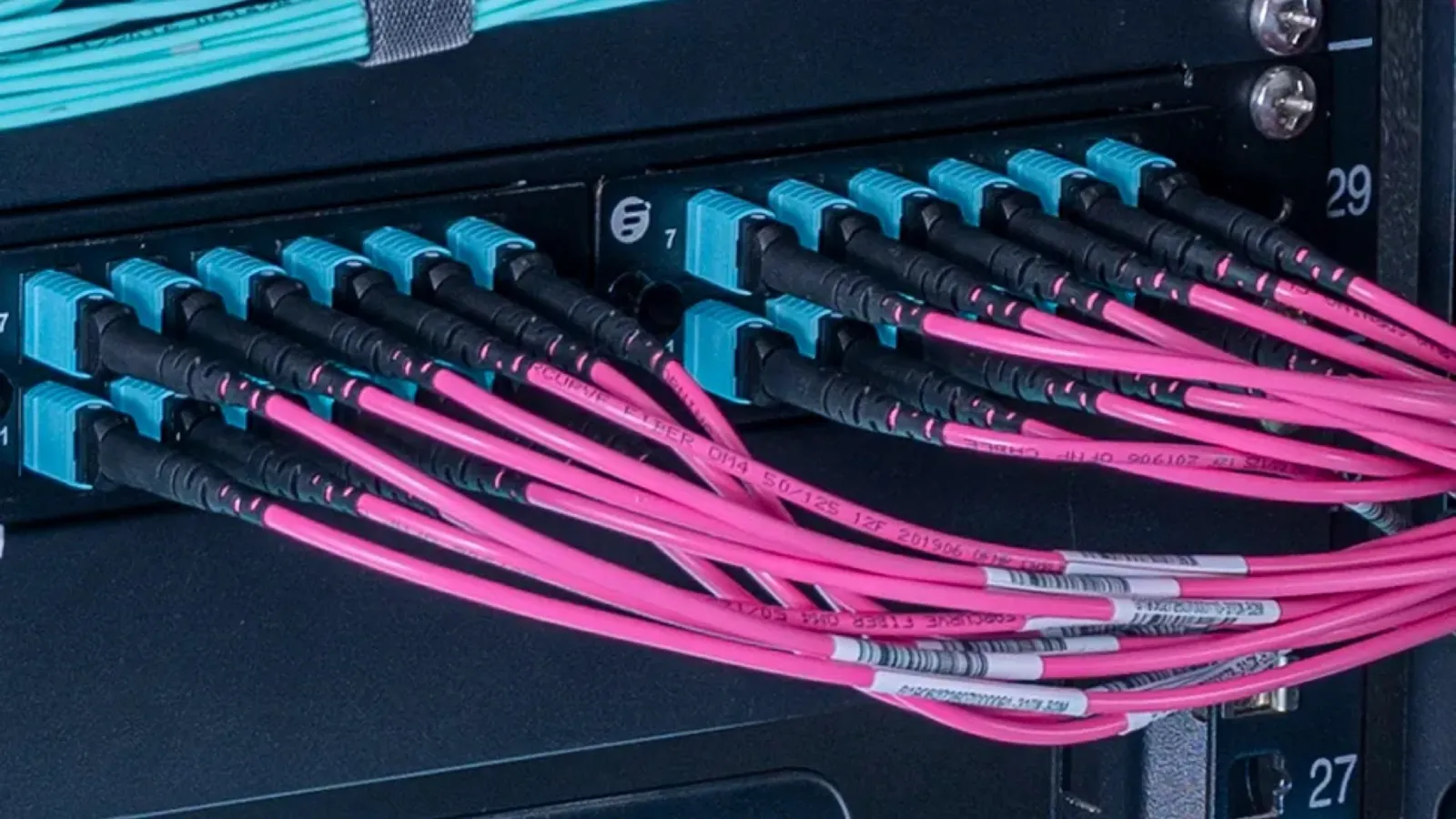
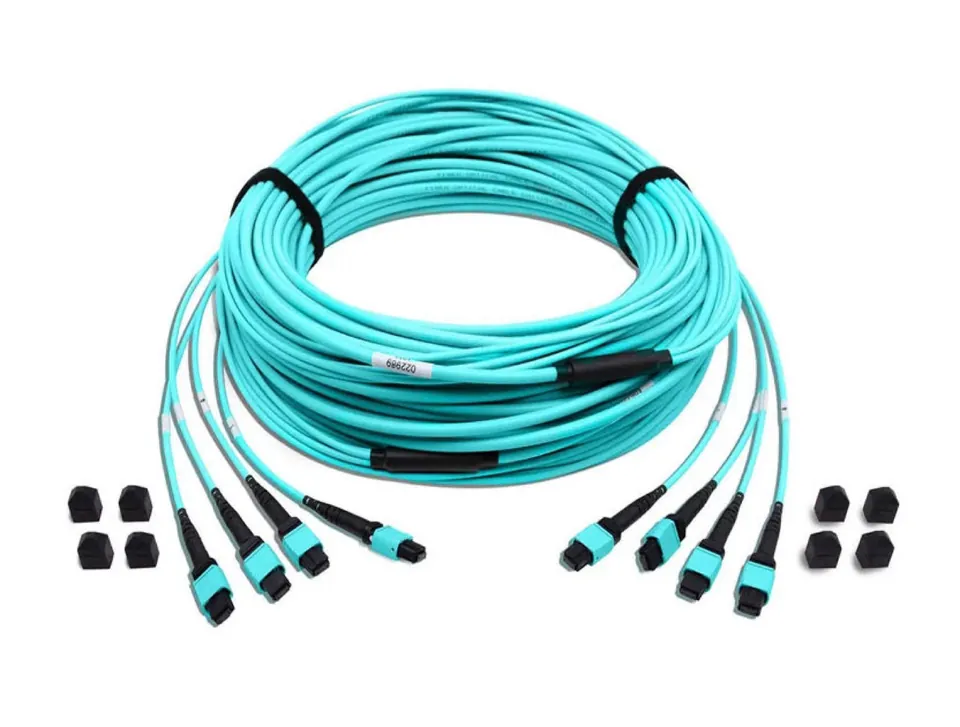
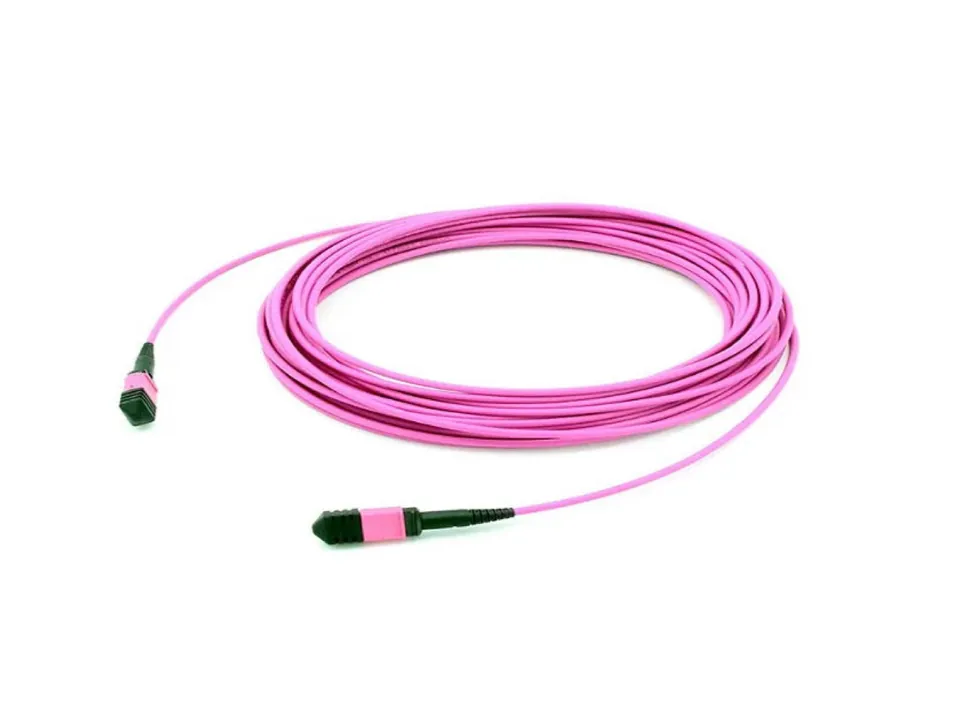
- MTP OM4 patch cords and MTP/MPO trunk cables for 100G, 400G and 800G multimode channels.
- MTP OM3 48-fibre patch cords for high-density frames where every rack unit counts.
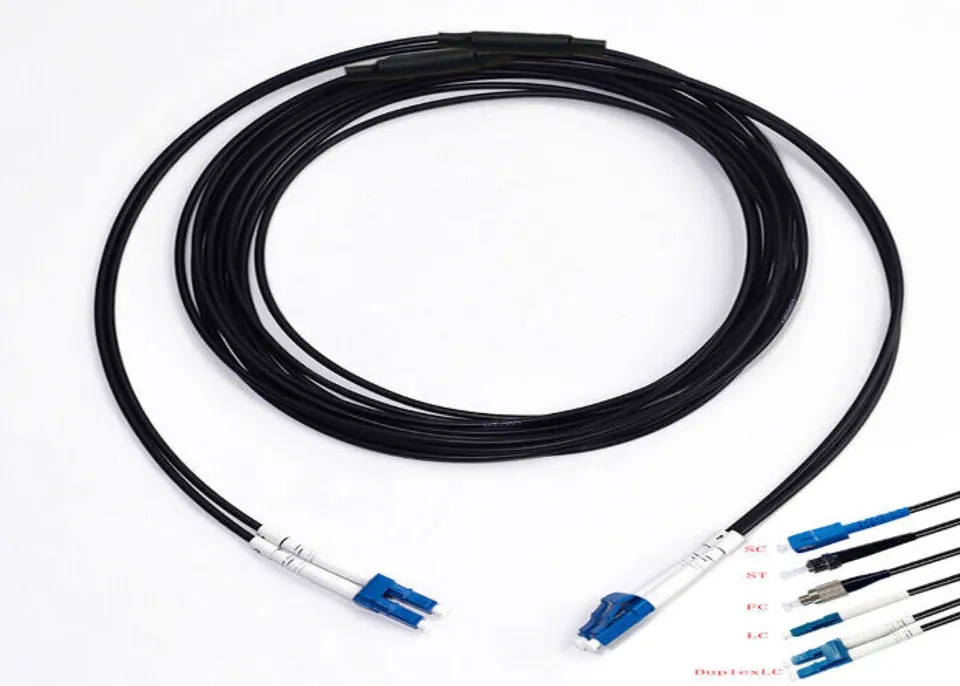
- LC, FC, SC and ST duplex armoured cable for campus, inter-building and riser links exposed to crush or rodents.
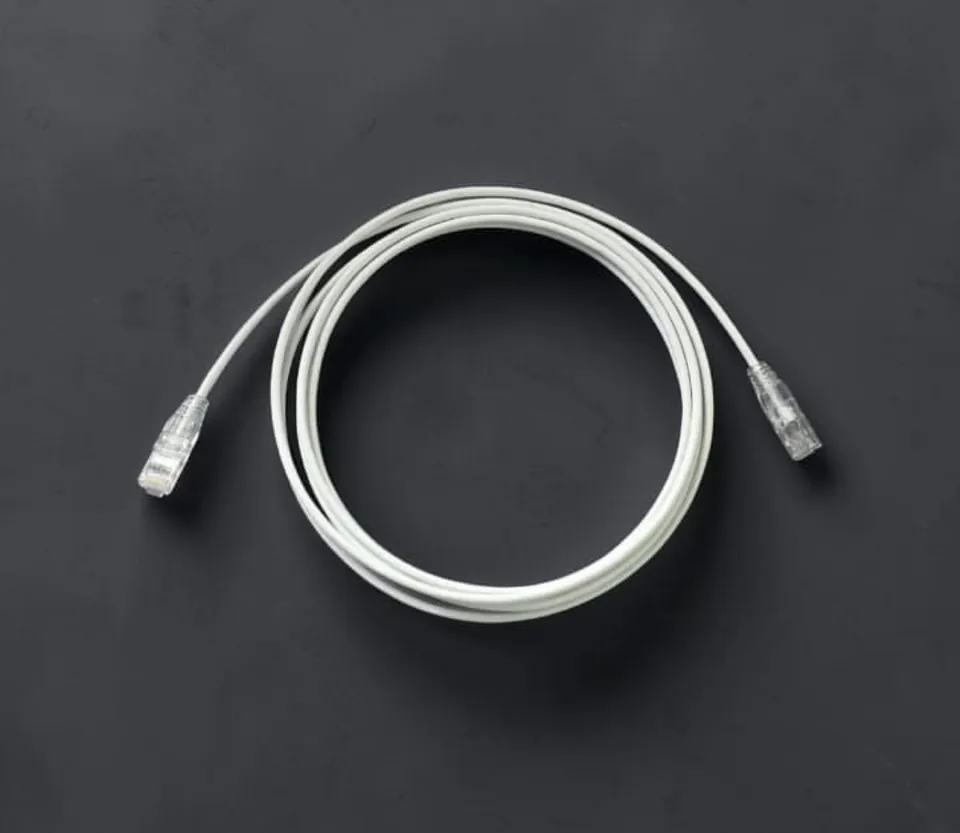
- CAT6 UTP LSZH slim flexible patch cords for management and copper ports, sized to fit real cable management.
MPO breakouts, conversion harnesses and single-mode OS2 assemblies are built to drawing alongside these lines.
What to specify
| Decision | Options | What decides it |
|---|---|---|
| Fibre type | OM3, OM4, OM5, OS2 | Optics planned over the cabling's life and the longest channel |
| MPO fibre count | 8, 12, 16, 24, or 48 as several legs | Transceiver type: SR4 and DR4 use 8, SR8 uses 16 |
| Polarity | TIA-568 Method A, B or C | One method across trunks, cassettes and cords |
| Gender | Pinned or unpinned at each end | Transceivers are pinned; mating pairs need one of each |
| Polish | Flat (multimode), APC (single-mode MPO) | Fibre type and optic datasheet |
| Loss | Maximum per mated pair | Channel budget; TIA-568 allows up to 0.75 dB per pair |
| Jacket | LSZH, riser, plenum, armoured | Fire code for the space and the route |
Design documents for data centres commonly reference TIA-942 for the facility and TIA-568 or ISO/IEC 11801 for the cabling. State which applies so the assemblies are labelled and documented to match.
Cassettes or direct breakouts
A cassette-based design converts the trunk's MPO to duplex LC ports at a panel. It is easy to reconfigure, but each cassette adds a mated pair at the rear and another at the front. A direct MPO to LC breakout removes the cassette and one mated pair, which helps where the loss budget is tight, at the cost of flexibility. For 40G, 100G and 400G parallel optics, an MPO-to-MPO path with MPO adapter panels avoids the conversion entirely. Choose per row: fixed spine and leaf links often suit direct MPO, while server rows that change often suit cassettes.
Campus, riser and building entrance links
Enterprise networks leave the hall. Links between buildings, up risers and across plant rooms need a cable that survives crush and rodents and carries the fire rating of each space it passes through. Armoured duplex cable suits these runs. Where the armour is metallic, plan to bond it at the building entrance as local electrical codes require, or choose an all-dielectric construction. Mark both ends with the same circuit identifier used in the hall so the campus link appears in the same records as the rest of the channel.
Lengths, labels and documentation
Order trunks to the measured route plus slack, and patch cords by position rather than one length per frame. Give the label text for each end from your own records; a label scheme agreed before manufacture saves a day of tracing at commissioning. Radix measures insertion loss and return loss on every channel and ships the report with the order, which becomes the baseline for later troubleshooting.
Send the port map, route lengths and polarity method through the request a quote page.
Questions buyers ask
Which fibre should a new data centre use, OM4 or OS2?
OM4 suits short multimode channels within the reach IEEE 802.3 publishes for SR optics, typically up to 100 m at 100G and 400G. OS2 suits longer channels and single-mode DR and FR optics. Many sites install both.
Do I need MPO-12 or MPO-16 for 400G?
400G SR8 multimode uses 16 fibres on an MPO-16. 400G DR4 single-mode uses 8 fibres on a 12-position APC MPO. The transceiver decides, so check its datasheet.
Can you build trunks to our measured lengths?
Yes. Trunks and cords are cut to the drawing, with breakout length and stagger as specified. Measure through the containment, not straight line.
Do your patch cords come in LSZH?
Yes. LSZH jackets can be specified for fibre and CAT6 cords, as can riser and plenum-rated jackets where the project follows those codes.