
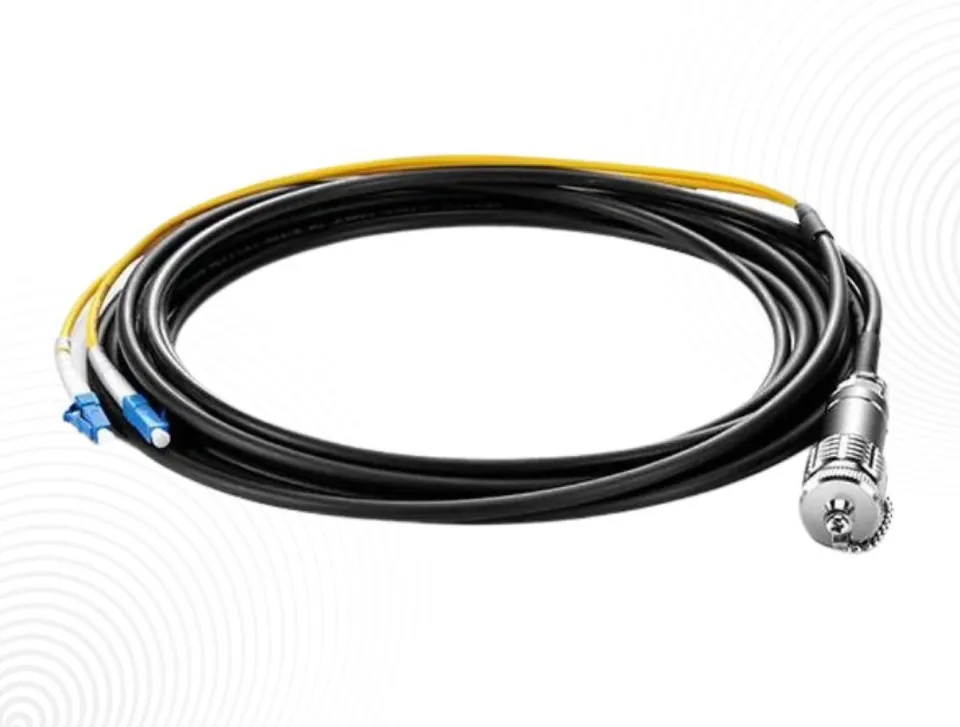

Why platforms use fibre, and what attacks it
An optical fibre carries no current, so it neither radiates nor picks up electromagnetic interference, and it weighs far less than the copper it replaces. On aircraft, vehicles, ships and deployed systems those two properties justify the change. The environment then works to break the link.
- Vibration and shock loosen couplings and fatigue fibre at the back of the connector.
- Temperature cycling works jackets and adhesives against the fibre.
- Fluids, including fuel, hydraulic oil and cleaning agents, attack jacket materials.
- Dirt and water reach field connectors mated outdoors.
- Crush and drag act on tactical cable laid across ground and driven over.
What Radix supplies for defence and aerospace
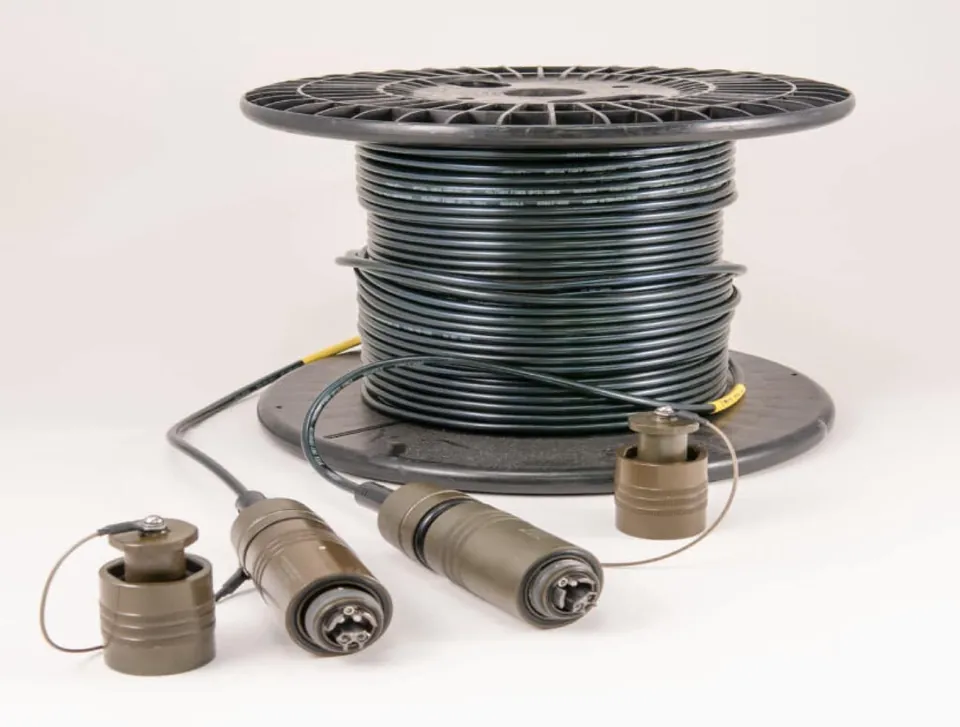
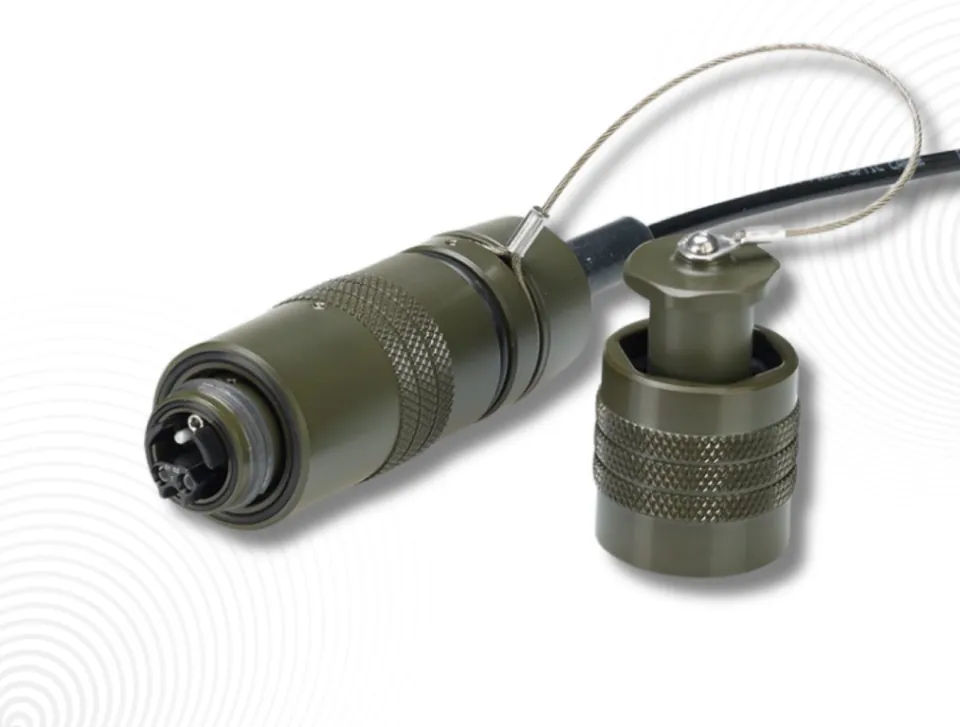
- Mil-aero fibre optic cable assemblies using circular multi-channel connectors of the MIL-DTL-38999 family and tactical connectors of the MIL-DTL-83526 family, built to drawing.
- Tactical HMA fibre optic cable rated for crush and repeated drag.
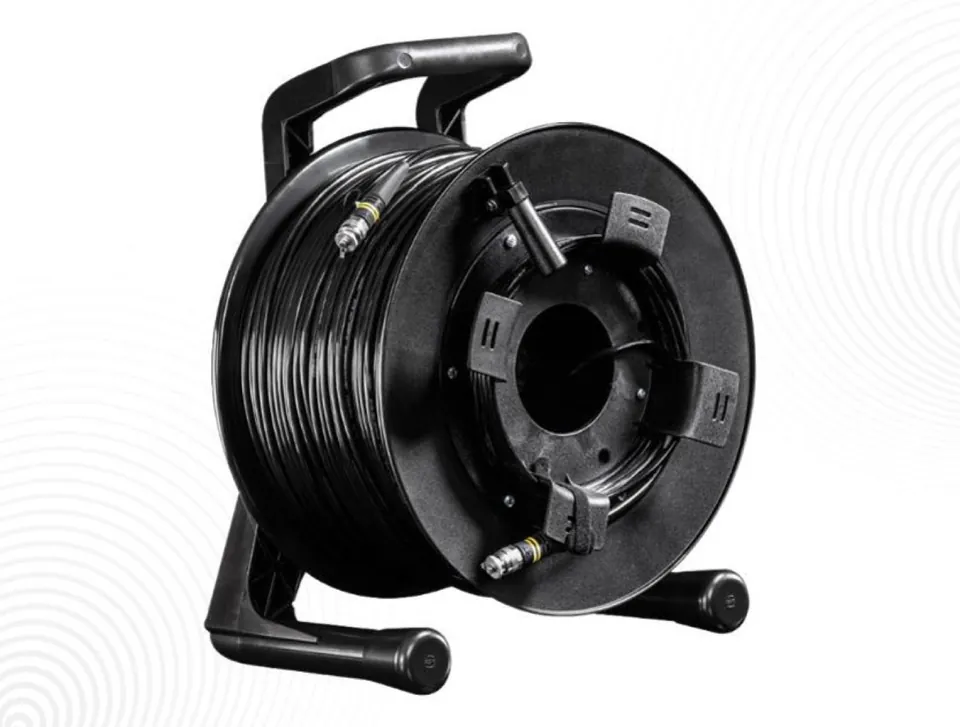
- Tactical cable reels that lay and recover quickly, alongside harsh-environment drums.
- Expanded beam connectors for field ends mated in dirt and water.
- Harnesses and optical systems built to platform drawings, plus sealed outdoor assemblies.
Physical contact or expanded beam
| Interface | How it couples | Strength | Trade-off |
|---|---|---|---|
| Physical contact | Polished fibre end faces touch inside the connector | Low insertion loss | Sensitive to dirt; needs cleaning before every mating |
| Expanded beam | Lenses widen the beam across an air gap | Tolerates dust and water; easy field cleaning | Higher insertion loss, larger connector |
Inside a sealed platform, physical contact connectors are usual. At field ends that are mated in the open, expanded beam often gives the better system result despite its higher loss. Include the higher loss in the link budget.
What to specify
- Connector standard and configuration: shell size, insert arrangement, keying and channel count for each end.
- Source requirements: whether the programme requires QPL-listed connectors or a named source. That is a sourcing decision to settle in the quote.
- Environment: the test methods the platform cites, often from MIL-STD-810, and the temperature range, fluids and vibration profile.
- Cable: fibre type and count, jacket material, and crush and flex requirements.
- Shielding and bonding where the assembly includes metallic elements or copper conductors.
- Marking: part number, revision and any identification method the platform requires.
- Test data: per-channel insertion loss and return loss, and any additional acceptance tests.
Tactical deployment
Tactical links are laid by hand or from a vehicle, often at night and in poor weather, and recovered for the next move. The specification should follow that cycle. Reels need to pay out without snagging and rewind without kinking. Connectors need captive dust caps that stay attached when the reel is dropped. Hermaphroditic tactical connectors, as described in MIL-DTL-83526, let any cable end mate with any other, so reels can be chained in the field without adapters or a male and female count.
Plan for cleaning in the field. Physical contact connectors need a cleaning kit and inspection scope with the crew; expanded beam connectors can usually be wiped clean. State the lengths of each reel and the number of reels that will be chained, so the total loss of the chained link, including every mated pair, stays within the equipment's budget.
Harnesses on platforms
A platform harness is routed through the airframe, hull or vehicle along a defined path. The drawing should give branch positions, clamp points, the minimum bend radius at each backshell, and the weight allowance where it matters. Fibre is light, but connectors, backshells and protective conduit are not, and they decide the harness weight.
Configuration control
Platform assemblies are built to a drawing revision, and every repeat order must match it. Radix confirms the design against the drawing in writing before manufacture and records lot and batch identification against each order. Issue a new drawing revision for every change, however small, so the build record and the platform documentation agree.
Send the drawing, connector schedule and environmental requirements through the request a quote page.
Questions buyers ask
What is MIL-DTL-38999 used for in fibre assemblies?
MIL-DTL-38999 defines a family of circular, multi-contact connectors widely used on military and aerospace platforms. Fibre optic contacts in these shells allow several optical channels, sometimes with electrical contacts, to mate through one sealed connector.
What is the difference between tactical and mil-aero fibre cable?
Tactical cable is built to be laid on the ground, driven over and recovered repeatedly. Mil-aero cable is installed inside a platform and built for vibration, temperature and fluids, usually at lower weight and diameter.
Do you supply QPL-listed parts?
If your programme requires QPL-listed connectors or a named source, state this on the drawing and BOM. Source requirements are confirmed in the quote before manufacture.
Can you build to our platform drawing?
Yes. Assemblies and harnesses are built to the customer's drawing, with the design confirmed in writing before manufacture and lot and batch identification recorded against each order.