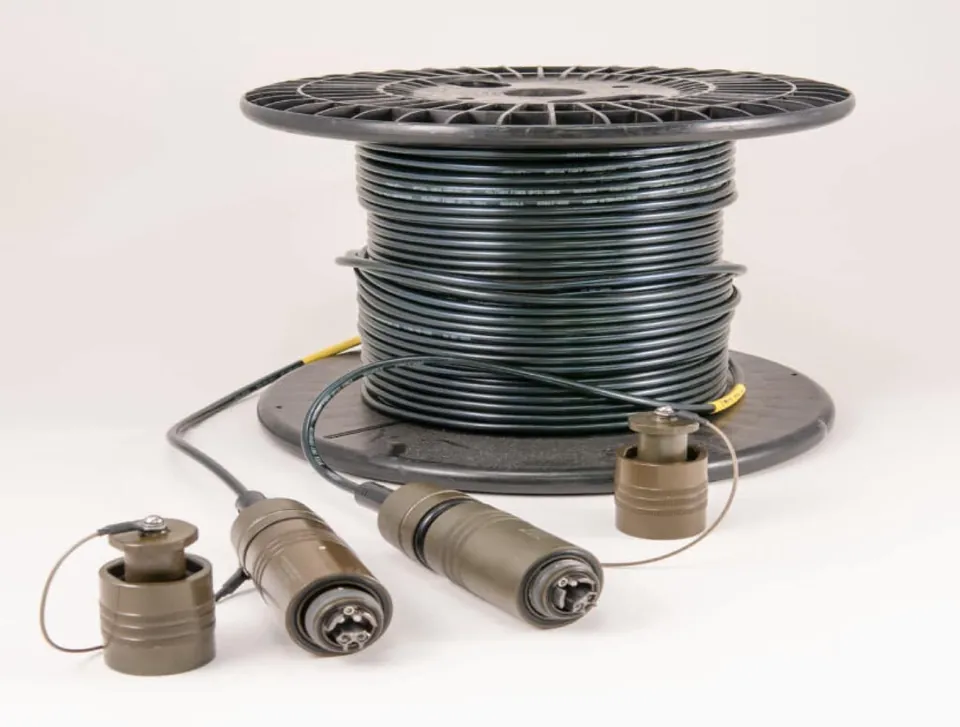
What harnesses and optical systems are
Defence platforms and field systems often need fibre links between several units: sensors, displays, radios and processors. A harness brings these links together in one assembly with the right branch lengths and connectors, so it can be fitted and tested as a unit instead of as loose cables. Radix builds these assemblies to work in high heat, heavy rain, dust storms and freezing cold.
Types offered
| Type | Description |
|---|---|
| Custom fibre optic assemblies | Built to the customer's drawing |
| Harsh-environment optical systems | For the most demanding field conditions |
| Pre-configured cable assemblies | Ready to use with minimal setup |
Stated features
- Designed for heat, cold, dust and moisture.
- Weatherproof, with a UV-resistant coating.
- Custom cable length, fibre type and connector configuration.
- Low-loss fibre links.
- Light and portable for remote use, with flexible winding and rewinding.
- Shock and vibration resistant.
- Multi-connector support for linking several pieces of equipment.
- Pre-tested, so they are ready to fit.
What to put in your drawing or RFQ
A harness is only as good as its specification. Include:
- A drawing with each branch, its length and the breakout point.
- Fibre type and count for each branch.
- Connector type at every end, and mating connectors on the equipment.
- Jacket material, and any sleeving or protection.
- Labelling at each end.
- The environment and any tests your programme requires.
The guide to writing an RFQ for fibre assemblies has a checklist. See also custom fibre optic assemblies, then send your drawing through the request a quote form.
Questions buyers ask
Can the harnesses handle extreme weather?
Yes. They are designed for rainstorms, dust, desert heat, mountains and freezing cold, with weatherproof construction and a UV-resistant coating.
Can I get a custom harness?
Yes. Send your drawing or requirement to the sales team. Radix builds harnesses to the customer's lengths, fibre types and connector layout.
Is installation simple?
The assemblies are pre-tested and ready to fit, so installation is plug in, set up and go. They are designed with remote locations in mind.
How is a harness different from separate patch cords?
A harness is one assembly with branches cut to length for each piece of equipment, so it installs, labels and tests as a unit. Separate cords need more routing, more labelling and more connection points that can fail.
Do the harnesses need regular maintenance?
Maintenance needs are low once installed. Keep connector caps fitted when links are open and clean end faces before mating.