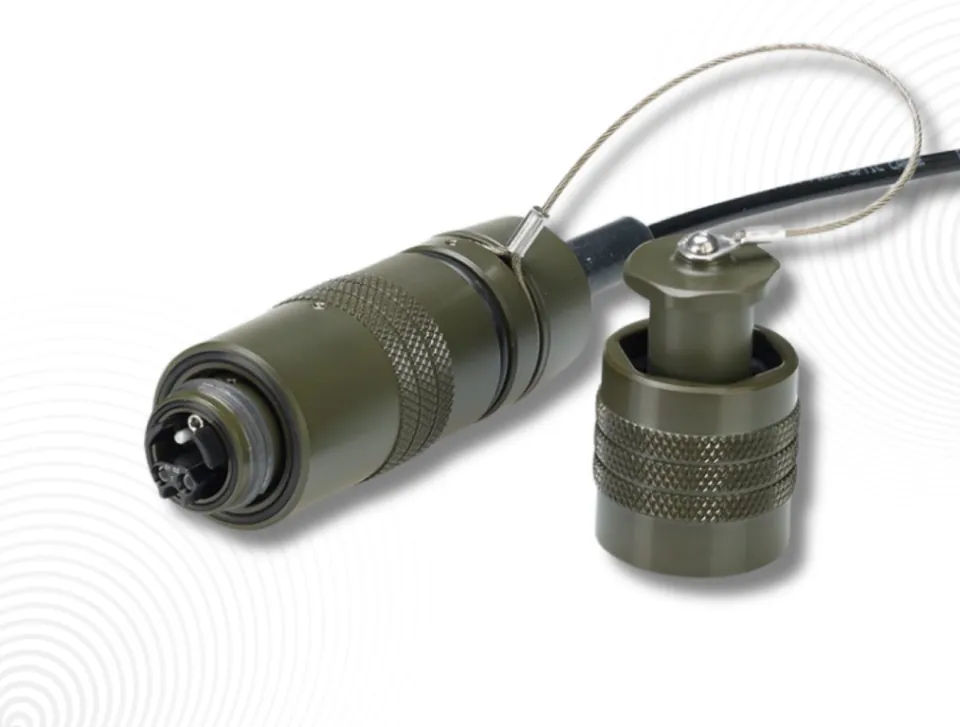
What mil-aero fibre assemblies are
Military and aerospace systems need fibre links that keep working through shock, vibration, moisture and wide temperature changes, and that are light and quick to deploy. Mil-aero fibre optic cable assemblies combine a rugged cable, connectors suited to the platform, and strain relief at each termination. The fibre itself is immune to electrical interference and much lighter than the copper it replaces. Radix offers four groups:
- Military-grade fibre assemblies for fixed and vehicle installations.
- Tactical optical fibre cables: light and flexible, for rapid deployment.
- Rugged assemblies with ST, LC, SC, FC or MIL-DTL-38999 connectors.
- Shielded cables with EMI/RFI protection for electrically noisy platforms.
Build and inspection
Each assembly has strain relief and extra protection at the terminations. Assemblies are checked for shock, moisture and heat before delivery, and every batch is inspected. If your programme calls up particular connector specifications, environmental test methods or documentation, list them in the RFQ so the build and the paperwork match. The RFQ guide for fibre assemblies shows what to include.
What to specify in your quote
- Fibre type and count.
- Connector at each end, including insert arrangement for MIL-DTL-38999.
- Jacket material, armour and shielding.
- Length, bend radius limits and routing constraints.
- Quantity, including OEM or project volumes.
Send your drawing through the request a quote form. See defence and aerospace for related products.
Questions buyers ask
Can mil-aero assemblies be made in custom lengths and terminations?
Yes. Radix customises length, fibre mode (single-mode or multimode), connector types such as ST, LC, SC and MIL-DTL-38999, and jacket materials, armoured or unarmoured.
Are bulk orders available for OEM or defence projects?
Yes. Radix supplies bulk quantities for OEMs, system integrators and defence contractors.
Are the assemblies supplied ready to install?
They are supplied pre-terminated, or ready for field installation where the cable must be pulled through ducts or bulkheads before connectors are fitted.
Which jacket materials are available?
LSZH, polyurethane and Teflon. The choice depends on fire performance, flexibility and chemical exposure on the platform.
Do the assemblies protect against electrical interference?
Fibre itself is immune to electromagnetic interference. For assemblies routed near noisy electronics, shielded EMI/RFI versions are also available.