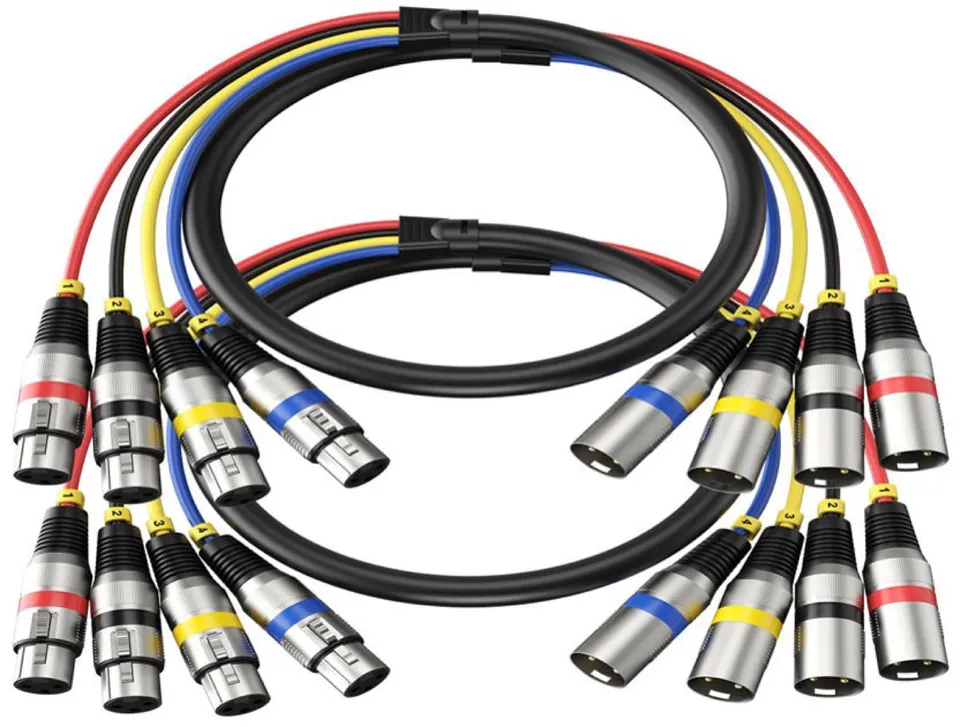
What a 4-channel XLR snake is
A live show or recording session can need many separate microphone and line runs. A snake cable replaces several individual leads with one compact cable, which keeps the stage tidy and the kit bag lighter. The Radix XLR snake combines four channels, each terminated in standard 3-pin XLR connectors.
It works when only one, two or three channels are in use, so the same cable covers small and larger setups. It is light, rolls up as a single cable and replaces the cost and clutter of several separate leads.
Construction
- Conductors: braided 64-strand OFC cores.
- Shielding: multilayer shielding to keep out noise.
- Connectors: self-locking, with zinc alloy shells and soldered joints.
- Identification: four colour-coded connectors with number tags, so channels are easy to match during setup.
Shielded, balanced cabling rejects much of the hum and interference picked up near lighting and power cables. That is why XLR is the standard connection for microphones and professional line-level audio. A passive XLR snake also passes phantom power to condenser microphones in the same way as a single XLR lead.
Where it is used
Studios, live shows, concerts, DJ booths and stage boxes. For digital audio networks and stage Ethernet, see the CAT6 SFTP snake cable, and for the wider range, broadcast and live production.
What to specify in your quote
- Length of the snake, and the length of each fan-out tail.
- Connector gender at each end (male or female XLR).
- Colour sequence and channel numbering, if you match an existing system.
- Quantity.
Send your requirement through the request a quote form.
Questions buyers ask
Can I use the 4-channel snake for only 2 or 3 channels?
Yes. The cable works with any number of channels from one to four.
Does it work with all XLR microphones?
It is compatible with standard 3-pin XLR devices.
Is it suitable for live concerts?
Yes. It is built for live and studio use.
Why use a snake instead of separate XLR cables?
One snake replaces four separate leads, so setup is quicker, the stage is tidier and there is less to carry. It rolls up as one cable, and it costs less to manage than several single cables that tangle and get lost.
How does the cable keep the sound clean?
Braided OFC cores and multilayer shielding reduce noise and interference, and balanced XLR connections reject much of what remains.