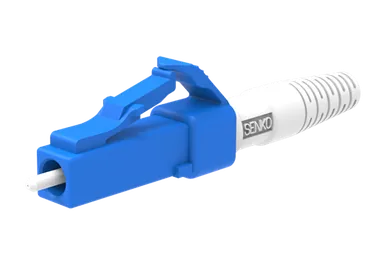
Connector
LC Premium Unibody Connector
Flagship LC connector with a robust unibody and precision ferrules, exceeding GR-326-CORE, in UPC and APC, single-mode and multimode.
- Duplex
- Single-mode
- Multimode
Click the photo to enlarge
The original two-piece LC connector, an economical choice for short links and for volume cord orders.
The LC two-piece connector is the original LC design, conforming to TIA, IEC and JIS standards and graded C under IEC 61753-1 for random mating. It is the economical LC for short links and volume cord orders. Radix can supply it loose or built into cords.
| Type | Two-piece LC connector |
|---|---|
| Typical insertion loss (Standard LC) | 0.12 dB |
| Maximum insertion loss (Standard LC) | 0.30 dB |
| Return loss | At least 55 dB UPC, 65 dB APC, 25 dB multimode |
| Operating temperature | -40 to +75 C |
| Durability | Under 0.2 dB change after 500 matings |
| Standards compliance | TIA, IEC, JIS; Grade C per IEC 61753-1 |
Figures are the manufacturer's published values for the product family and grade; check the data sheet for the exact part number you order. Radix confirms the build in your quote.
| Fibre type | Single-mode, Multimode, or other on request |
|---|---|
| Polish | UPC, APC, or other on request |
| Packaging and labelling | On request |
Radix supplies this part loose, or built into patch cords, pigtails and assemblies to your drawing, quoted by form, phone or WhatsApp from Pune.
Send us:
Add this part to your list, add more parts, then send one request.
The LC two-piece connector is the original LC design: a ferrule assembly and an outer housing as two separate parts. It meets TIA, IEC and JIS standards, is graded C under IEC 61753-1 for random mating, and it is the economical choice in the LC connector and adapter range. Radix can supply it loose or built into patch cords and assemblies to your drawing.
The LC format was created as a small form factor connector with a 1.25 mm ferrule, half the area of the SC. The two-piece design is the one most people picture when they say LC. A premium unibody version came later with a single moulded body and tighter ferrule control. The two-piece remains in wide use because it is cheap, widely compatible and good enough for a great many links.
If you are choosing between formats, the LC connector guide and the fibre connector types guide give the overview. The whole the manufacturer catalogue starts from the connector section.
The two-piece LC conforms to TIA, IEC and JIS connector standards. That matters because the interface geometry has to be the same for connectors from different makers to mate. Compliance with the standards means a LC will go into a third-party adapter, and a third-party LC will go into a the manufacturer adapter.
Grade C under IEC 61753-1 refers to performance classes for connectors with random mating, meaning connectors picked at random from production and mated together. It is a standard performance class, not the best one available. The tighter grades are for connectors measured against a reference or built with tighter tolerances.
| Aspect | Two-piece LC (this page) | Premium unibody LC |
|---|---|---|
| Standards | TIA, IEC, JIS | Exceeds GR-326-CORE per the manufacturer |
| Random-mating grade | Grade C (IEC 61753-1) | Lower loss, see the manufacturer figures |
| Body | Two parts | One moulded body |
| Cost | Economical | Higher |
| Typical single-mode loss | 0.12 dB | 0.05 to 0.12 dB |
| Maximum loss | 0.30 dB | 0.15 to 0.25 dB |
Read the insertion loss vs return loss guide for how these performance numbers are measured and why a pass on loss does not prove a pass on return loss.
From the manufacturer’s LC family figures, the standard LC has a typical insertion loss of 0.12 dB and a maximum of 0.30 dB. Return loss is at least 55 dB for UPC, 65 dB for APC and 25 dB for multimode. The operating temperature is -40 to +75 C, and the change after 500 matings is under 0.2 dB.
| Parameter | Standard LC (two-piece) |
|---|---|
| Typical insertion loss | 0.12 dB |
| Maximum insertion loss | 0.30 dB |
| Return loss, UPC | At least 55 dB |
| Return loss, APC | At least 65 dB |
| Return loss, multimode | At least 25 dB |
| Temperature | -40 to +75 C |
| Change after 500 matings | Under 0.2 dB |
The maximum is the number to budget with when a link must pass without a retest. A typical figure describes the average connector; a maximum describes the worst you should accept from a standard-grade part.
For single-mode links with four or more mated pairs, or for high-speed paths with a tight budget, look at the LC premium unibody connector. The fibre loss budget guide shows how to decide.
| Connector | Use it when |
|---|---|
| LC two-piece (this page) | Economy, wide compatibility, short links |
| LC premium unibody | Tight loss budget, many mated pairs |
| LC keyed | Network segregation by key colour |
| LC switchable uniboot | Single round cable duplex, tool-less polarity reversal |
| LC non-pull proof | Tight-packed mil-spec cable |
All of these share the LC interface, so they mate with the same adapters. The differences are in the body, the ferrule control, the cable format and any special feature. Choosing among them is about the link requirement, not about compatibility.
Assumed scenario, all values assumed: a hosting room needs 200 single-mode duplex LC patch cords, 2 m each, between switches and patch panels. Each channel will have two mated pairs. The designer allows 0.5 dB for connectors.
Standard LC maximum: 0.30 dB per pair, so two pairs give 0.60 dB. That exceeds the 0.5 dB allowance, so the designer cannot budget on maxima with standard parts. Using typical values (0.12 dB per pair), two pairs give 0.24 dB, which passes.
| Basis | Per pair | Two pairs | Against 0.5 dB |
|---|---|---|---|
| Standard typical | 0.12 dB | 0.24 dB | Passes, margin 0.26 dB |
| Standard maximum | 0.30 dB | 0.60 dB | Fails by 0.10 dB |
| Premium maximum, low end | 0.15 dB | 0.30 dB | Passes, margin 0.20 dB |
| Premium maximum, high end | 0.25 dB | 0.50 dB | Just passes, zero margin |
The decision depends on how the acceptance test is written. If acceptance is the measured total on each channel, standard parts will usually pass, since measured loss tracks typical. If the budget is a guarantee against maxima, premium is the safer purchase. Connector count for the order: 200 cords x 4 connectors = 800 connectors, plus spares of perhaps 2 to 5 percent as a planning figure of your own choosing.
Use dust caps on every unmated connector, inspect before mating and clean dry, following the end-face cleaning and inspection guide. The two-piece LC is as sensitive to dirt as any other 1.25 mm ferrule connector, and a cheap connector with a clean end face outperforms an expensive one with a dirty one.
Do not hang heavy bundles from LC latches. Support cords with managers and Velcro ties rather than letting the latch bear the weight, and avoid sharp bends right behind the boot.
Send details via the request a quote page, email, phone or WhatsApp. Radix is in Pune, and works to drawings, sourcing the connectors.
Radix tests each cord before dispatch. Common cord forms are on the LC to LC patch cord page, the OM3 LC duplex page and the OS2 LC APC page.
Do not choose the standard two-piece for links with a tight loss budget, for high-speed single-mode with many connector pairs, or for panels patched very often. It also lacks the special features of siblings, such as keying, a switchable polarity uniboot or tight-packed cable support.
For sealed or outdoor links look at the IP harsh environment connectors. For other cord formats, see the fibre optic patch cords section.
It is the original LC design in which the ferrule assembly and the outer housing are separate parts. The manufacturer’s version meets TIA, IEC and JIS standards and is Grade C under IEC 61753-1 for random mating.
Grade C is a performance class in IEC 61753-1 for connectors that are mated at random from production. It is a standard class, looser than the grades used for reference-matched or premium connectors.
The manufacturer’s standard LC figures are a typical 0.12 dB and a maximum of 0.30 dB insertion loss. Return loss is at least 55 dB for UPC, 65 dB for APC and 25 dB for multimode.
It follows TIA, IEC and JIS interface standards, so it is designed to mate with standard LC adapters. Check the adapter's grade if the link is tight.
Choose premium when the channel has several mated pairs, the budget is tight, or the panel is patched often. For short links with margin, standard is enough.
The LC family has both polishes. State the one you need when you ask Radix, and keep each in its own adapters.
Radix can supply the connector loose or built into patch cords and assemblies to your drawing. Send fibre type, polish, length, cable diameter and quantity.
That depends on your process and your termination method. Radix can advise on spares when you send the quantity and the use.
Connector
Flagship LC connector with a robust unibody and precision ferrules, exceeding GR-326-CORE, in UPC and APC, single-mode and multimode.
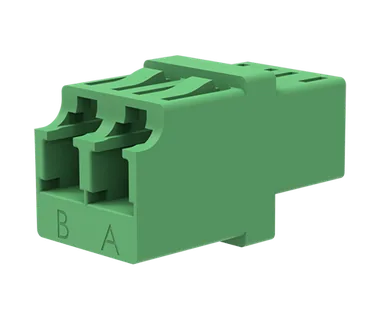
Adapter
Compact LC coupler that fits industry RJ-45 style outlets and panels, the plain default adapter for general patching.
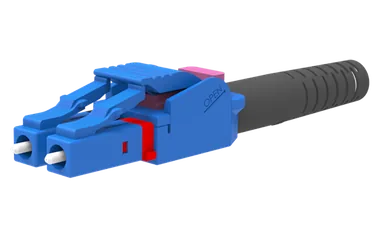
Connector
Duplex LC on a single round cable with tool-less polarity reversing and a latch lock, for tidy cords with a field fix.
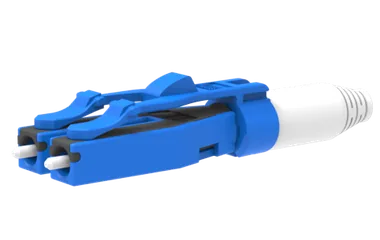
Connector
Duplex uniboot LC connector that reverses polarity quickly, with a reduced profile latch and a push-pull tab option.
All lc connectors and adapters or browse the full connector range
Send the part, quantity and drawing. An engineer replies with questions or a quote.
Fill in what you know. An engineer replies from sales@radixfibrotech.com, Monday to Friday, 09:00 to 18:00 India time. Prefer to talk? Call +91 99702 02526.
Your reference is . A confirmation is on its way to your inbox. We reply from sales@radixfibrotech.com, Monday to Friday, 09:00 to 18:00 India time.
Urgent, or have a drawing? Send the reference on WhatsApp and we will pick it up there.