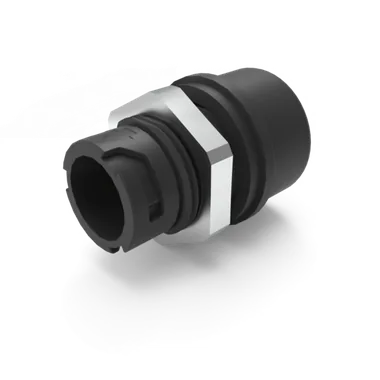
Adapter
IP-9 SN Adapter
Small footprint IP68 SN adapter to mate IP-9 SN plugs through a panel or enclosure wall where space is limited.
- Outdoor
- IP68
Click the photo to enlarge
IP series harsh environment connectors
Smallest footprint IP68 outdoor SN plug, for sealed outdoor links where panel and enclosure space is tight.
The IP-9 SN connector is the manufacturer’s smallest outdoor IP68 SN duplex connector. It uses the SN format of two 1.25 mm ferrules, a Safe Lock Ring and a 100 lbf (450 N) family pull figure. It is for outdoor radio, small-cell and distribution equipment where an indoor SN plug would be exposed to water and dust.
| Type | IP-9 SN connector |
|---|---|
| IP rating | IP68 |
| Footprint | Smallest footprint outdoor IP68 |
| Locking | Safe Lock Ring (IP-9 series) |
| Fibre type | Single-mode |
| Polish | UPC or APC |
| Typical insertion loss | 0.05 to 0.12 dB single-mode |
| Maximum insertion loss | 0.15 to 0.25 dB |
| Pull force | 100 lbf (450 N) |
| Rating note | IP rating validated with a manufacturer sourced cable; retest with other cables |
Figures are the manufacturer's published values for the product family and grade; check the data sheet for the exact part number you order. Radix confirms the build in your quote.
| Polish | UPC, APC, or other on request |
|---|---|
| Packaging and labelling | On request |
Radix supplies this part loose, or built into patch cords, pigtails and assemblies to your drawing, quoted by form, phone or WhatsApp from Pune.
Send us:
Add this part to your list, add more parts, then send one request.
The IP-9 SN connector is a waterproof outdoor version of the SN duplex connector, made by the manufacturer for fibre links that leave the cabinet. The manufacturer lists it as the smallest footprint outdoor IP68 SN connector in its range. Radix can supply the IP-9 SN connector from loose or built into patch cords and cable assemblies to your drawing.
SN is a very small duplex format. It uses two 1.25 mm ferrules in one body, which is the same ferrule size as LC but at a tighter pitch, so more ports fit in a given panel or transceiver face. That density argument is the reason to choose SN in the first place. The IP-9 SN connector carries that format outdoors, behind a seal and a locking ring, for places such as radio equipment, small cells and wall-mounted outdoor enclosures. You can read about the indoor part of the format in the these connectors section and in the SN connectors hub.
This page is for a buyer who has to decide whether the IP-9 SN fits a design, what it mates with, and what to send for a quote.
The table uses only the numbers the manufacturer publishes for the IP series and for this part. Dimensions, cable ranges and ordering codes are not listed here, so check the current data sheet.
| Item | What the manufacturer states | Reading it |
|---|---|---|
| Ingress rating | IP68 (IP-9 range) | Dust-tight and rated for immersion, validated with a manufacturer sourced cable and procedure. Retest with other cable. |
| Size | Smallest footprint outdoor IP68 SN | Chosen when space is the constraint. |
| Lock | Safe Lock Ring on IP-9 and IP-16 families | Ring-style locking to resist pull and vibration. |
| Pull force | 100 lbf (450 N) family figure | A connector limit. The cable and the strain relief set the real limit. |
| Single-mode loss | Typical 0.05 to 0.12 dB, maximum 0.15 to 0.25 dB (LC/SC/SN versions) | Use the maximum in a budget. |
Note what is absent. The manufacturer does not give a connector count per panel, a cable range or a temperature range in the figures used here. Do not infer them from the indoor SN data sheet, because the outdoor body is different.
An IP-9 SN connector plugs into the matching IP-9 SN adapter. The adapter is a sealed bulkhead or in-line piece, and the two parts are made as a pair. You cannot use an indoor SN adapter and expect the same seal.
Because SN is a duplex connector, there is a transmit side and a receive side. A duplex patch cord has the fibres crossed end to end so that transmit meets receive, which is the same logic as LC duplex. Some indoor SN connectors in this range let you reverse polarity in the field; read the SN polarity changeable connector page to see how that works on the indoor side. For the outdoor IP-9 SN, ask Radix or check the data sheet whether polarity can be changed on site before you assume it can.
Mating follows a fixed order:
Polarity mistakes outdoors are expensive because the connector is at the top of a mast or inside a sealed enclosure. Mark the two legs on the cable, and write the polarity on the drawing before the order. The wider topic of duplex orientation is in the simplex vs duplex patch cord guide.
| Part | Format | What differs | Link |
|---|---|---|---|
| IP-9 SN connector (this page) | SN duplex, 1.25 mm ferrules | Smallest outdoor IP68 SN with Safe Lock Ring | Here |
| IP-9 SC connector | SC simplex, 2.5 mm ferrule | Larger ferrule, simplex, widespread equipment base | See IP-9 SC connector |
| IP-9 MPO connector | MPO multi-fibre | Many fibres in one plug | See IP-9 MPO connector |
| IP-16 SN connector | SN duplex | Larger IP-16 body, same SN format | See IP-16 SN connector |
| IP-25 hybrid SN | SN with hybrid copper | Fibre plus power or signal conductors | See IP-25 hybrid SN connector |
The choice between IP-9 and IP-16 for the same SN format is a space and compatibility choice. The optical interface is the same SN ferrule arrangement, and the main differences are the outer body, the way it seats in the adapter, and what the enclosure was built to take. Do not mix them unless the data sheet says the plug and adapter are designed to mate.
Outdoor SN is typically found where equipment needs small, sealed, duplex ports: small cells, remote radio hardware with SN or SFP cages, outdoor wall boxes and compact distribution points. Dense indoor panels carry the same format, so a single SN family can run from the transceiver to the outdoor box.
Where the transceiver end is an SFP at a radio, compare with the IP-J connector, which is described as a direct SFP connection. The IP-9 SN is for jumpers and distribution, not for plugging straight into an SFP cage.
These numbers are assumed to show how to work the problem, and are not Radix or the manufacturer specifications.
A site has an outdoor cabinet that takes eight duplex SN links from a cable entering at the bottom. Each link is two fibres, so sixteen fibres in total. Assume each link has one IP-9 SN joint at the cabinet maximum of 0.25 dB applies, and the far end uses an assumed 0.3 dB indoor joint with an assumed 0.4 km of cable at 0.35 dB/km.
| Item | Basis | Loss (dB) |
|---|---|---|
| Cable, 0.4 km | Assumed 0.35 dB/km | 0.14 |
| IP-9 SN joint | The manufacturer maximum | 0.25 |
| Far-end joint | Assumed | 0.30 |
| One splice | Assumed 0.1 dB | 0.10 |
| Total per link | Sum | 0.79 |
At 0.79 dB per link the optical budget is not the issue for most transceivers. Count the plugs instead: eight links need eight duplex plugs at the cabinet, eight matching adapters in the wall or on a plate, and caps for every port that is unused. Order spare caps and a few spare plugs in the same quote. The tool for budget checks is the loss budget calculator.
SN ferrules are 1.25 mm, so the usual rules for small ferrules apply. A one-click cleaner made for 1.25 mm ferrules is the quickest tool, and a lint-free wipe with a fibre cleaning fluid works if you have to. Inspect before mating and after cleaning, with a scope that can show a small ferrule. The procedure is laid out in the end face cleaning and inspection guide.
Two habits cut most outdoor faults. First, never leave an unmated plug uncapped, even for a minute, if there is wind-blown dust or spray. Second, do not twist the cable while locking the ring. If the plug body turns inside the ring and the cable is under torsion, the cable can spring back and loosen the lock. Hold the cable still and rotate the ring only.
Radix supplies the IP-9 SN connector loose, or built into cords and assemblies to your drawing, with quoting by form, phone or WhatsApp from Pune. Use the quote form with these items:
For a cord built to your drawing, the custom fibre optic assemblies page explains the process, and the RFQ guide shows what a complete request looks like. Radix tests each cord before dispatch.
The rest of the outdoor family is in the IP series harsh environment connectors hub. The wider guidance on IP ratings is in IP67 and IP68 fibre connectors explained.
It is a waterproof, outdoor SN duplex connector. It is rated IP68, has the smallest footprint in the outdoor range for the SN format, and uses a Safe Lock Ring with a 100 lbf (450 N) family pull figure.
Both carry the SN duplex format and the Safe Lock Ring. IP-9 has the smaller body and IP-16 the larger one. The two are not interchangeable with each other's adapters unless the data sheet says so.
It will mate physically only if the plug geometry allows, and you would lose the outdoor seal. The designed pair is the IP-9 SN plug and the IP-9 SN adapter, so use them together.
No. Both use 1.25 mm ferrules, but SN has a different body and tighter pitch, so you cannot mate SN to LC without a hybrid adapter. Do not assume cross-compatibility unless you have a hybrid part.
The manufacturer gives 0.05 to 0.12 dB as typical and 0.15 to 0.25 dB as the maximum for the LC, SC and SN versions on single-mode. Use the maximum when you plan a link.
Indoor SN types are available with polarity change. For the outdoor IP-9 SN, ask Radix or check the current data sheet before you plan on it. Mark polarity on the drawing at order time either way.
Yes. Radix can supply the connector and build it onto a cable of your choice, to your length, polish and marking. Send the details by the form, by phone or on WhatsApp.
The reason is density and size. If the enclosure or radio has SN ports, you need SN. If it uses LC ports, LC outdoor parts such as the waterproof LC are the match. The equipment decides, not preference.
Adapter
Small footprint IP68 SN adapter to mate IP-9 SN plugs through a panel or enclosure wall where space is limited.
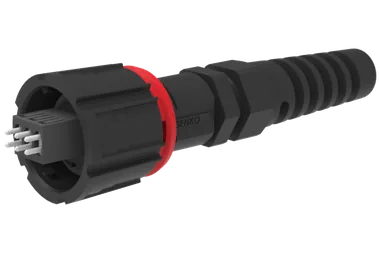
Connector
IP68 outdoor SN plug with Safe Lock Ring, a compact format for sealed outdoor links, built loose or into cords to your drawing.
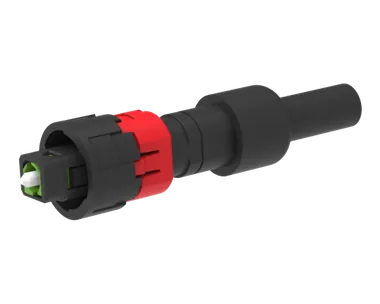
Connector
Smallest footprint IP68 outdoor SC plug with patented Safe Lock Ring, for tight outdoor panels and enclosures.
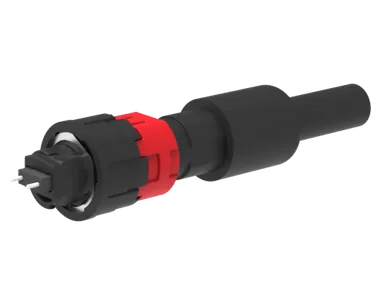
Connector
Smallest footprint outdoor IP68 MPO connector, for multi-fibre links in tight panels, supplied loose or built into cords.
All ip series harsh environment connectors or browse the full connector range
Send the part, quantity and drawing. An engineer replies with questions or a quote.
Fill in what you know. An engineer replies from sales@radixfibrotech.com, Monday to Friday, 09:00 to 18:00 India time. Prefer to talk? Call +91 99702 02526.
Your reference is . A confirmation is on its way to your inbox. We reply from sales@radixfibrotech.com, Monday to Friday, 09:00 to 18:00 India time.
Urgent, or have a drawing? Send the reference on WhatsApp and we will pick it up there.